


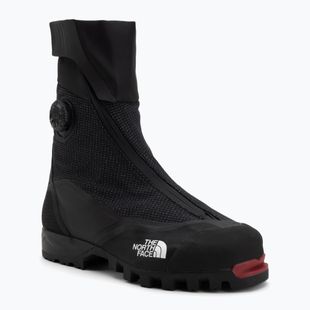
 Mountaineering boots The North Face Summit Verto Fa tnf black/tnf red€529.99Recommended retail price: €699.99
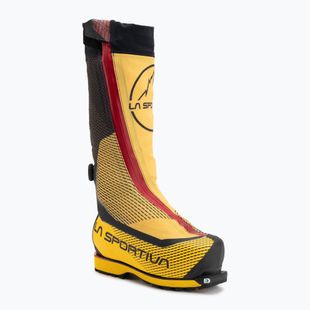 Mountaineering boots La Sportiva Olympus Mons yellow/black€929.99Recommended retail price: €1,149.00
Mountaineering boots for demanding mountain routes and winter conditions
Mountaineering boots are designed for moving in demanding terrain where stable foot support, protection from the elements and the ability to safely use appropriate technical equipment matter. Compared to classic trekking footwear, mountaineering boots usually have a stiffer construction, a reinforced upper and a sole prepared for movement on snow, ice, rock and uneven ground. The choice of model should depend on the type of planned outings, the season, the time spent in the field and the equipment used. Mountaineering boots from La Sportiva are worth comparing in terms of stiffness, collar height, insulation and crampon compatibility. La Sportiva mountaineering boots can suit both ambitious mountain trekking and more technical activities, depending on the construction of the specific model. When choosing, toe protection, heel stabilization, a grippy sole, water resistance, thermal comfort and the possibility of precise lacing adjustment matter. In winter terrain it is also important to correctly match the footwear with crampons and microspikes appropriate for the conditions and the boot construction. Properly chosen mountaineering boots should leave enough room for the toes while limiting heel lift on ascents and descents. The characteristics are determined by the whole system of sole, upper, insulation and lacing system, so it is not worth judging a model solely by its weight or appearance. Properly fitted mountaineering boots support foot placement control, protect the feet and provide more confident movement in demanding terrain.
Women’s and men’s mountaineering boots – fit, size and construction
Mountaineering boots should fit the length and width of the foot, the midfoot volume, the shape of the heel and the type of socks used during trips. Women’s mountaineering boots may differ from men’s models in cuff proportions, internal volume and available size range, but the basis of choice remains individual fit. Likewise, men’s mountaineering boots should not be selected only based on the size worn in everyday shoes. When trying them on, check the toe room, heel hold, pressure on the instep and the behaviour of the foot during a simulated descent. Mountaineering boots must not cause strong localized pressure, because during multi-hour walking even a small discomfort can lead to chafing. An overly large model is also not a good solution – a sliding foot worsens control and increases the risk of blisters. Women’s mountaineering boots should be tried on with socks of similar thickness to those used in the field, while still leaving room for the toes to move freely in low temperatures.
Mountaineering boots can have uppers made of leather, synthetic materials or constructions combining several types of fabrics. The properties of a specific model result not only from the material but also from the arrangement of reinforcing panels, the membrane used, the sole and the method of joining individual components. Models from SCARPA can be evaluated in terms of use for high-altitude trekking, alpinism and winter activities. SCARPA mountaineering boots should be chosen taking into account sole stiffness, the level of upper protection and compatibility with equipment. On a second appraisal, SCARPA mountaineering boots are worth assessing for lacing precision, ankle support, heel profile and the weight of the pair. Men’s mountaineering boots intended for long approaches should not be stiffer than required by the planned activity, because a very technical construction can limit the natural roll of the foot on easier routes. Conversely, too soft footwear will not provide proper support in more demanding terrain and when working with crampons. A useful addition to equipment can be gaiters, which help reduce the amount of snow and small debris getting into the boot. Properly fitted women’s and men’s mountaineering boots should work with the foot without the need for excessive tightening of the laces. A well-chosen size, appropriate stiffness and stabilization make mountaineering boots comfortable even during multi-hour movement in the mountains.
Winter mountaineering boots – insulation, sole and crampon compatibility
Mountaineering boots used in winter must meet much tougher conditions than models intended primarily for the warmer part of the season. Winter mountaineering boots should provide an appropriate level of insulation, protection against moisture and a construction that allows stable movement on snow and frozen ground. Sole stiffness is important because it affects the boot’s behaviour when using crampons and moving on steep sections. Mountaineering boots can be adapted to strap-on, semi-automatic or automatic crampons, but compatibility should always be checked for the specific model. The presence of appropriate welts on the sole is one of the elements that determine the possibility of using more technical attachment systems. Winter mountaineering boots should not be bought together with crampons solely based on similar size – both elements require physical fitting and checking the stability of the attachment.
Boots intended for low temperatures should leave room for an insulating layer without excessively compressing the foot. Too tight a fit can worsen thermal comfort, so internal volume, lining thickness, tongue construction and the possibility of adjustment in different zones are important. Models from Salewa can be compared in terms of intended use, level of stiffening and protection needed during winter outings. Salewa mountaineering boots should also be evaluated for toe cap, lateral reinforcement, sole traction and the construction that limits snow ingress. For more technical trips, a complement to equipment are ice axes, which should be chosen according to the type of activity and terrain difficulty. Winter mountaineering boots also require proper care after returning. Snow, mud and salt should be removed, insoles taken out, lacing loosened and the footwear left to dry according to the manufacturer’s recommendations. The drying process should not be accelerated by placing boots directly next to a very intense heat source if the manufacturer does not allow it. Regular impregnation, checking seams, the condition of the sole, welts and binding elements matter. Well-prepared winter mountaineering boots provide appropriate support and protection during cold trips, and conscious matching to the terrain allows one to make the most of what mountaineering boots offer.
Mountaineering boots from La Sportiva and The North Face – how to choose the right model?
It is worth comparing mountaineering boots based on real use, because a model that works well during a long approach with a backpack may differ from a construction intended for steep, technical sections. La Sportiva mountaineering boots can come in variants with different stiffness, cuff height and insulation level, so before purchase check the intended use indicated for the specific product. The same principle applies to models from The North Face. The North Face mountaineering boots should be analysed in terms of sole construction, moisture protection, upper reinforcement and fit for the type of mountain outings. Mountaineering boots chosen for classic trekking may provide greater flexibility during walking, while more technical models focus on stiff support, stability and cooperation with winter gear. The North Face mountaineering boots should not be judged only by appearance, just as La Sportiva mountaineering boots require matching specific parameters to the user’s needs.
Before the first serious trip, mountaineering boots should be tested during shorter outings to assess the upper’s behaviour, the heel performance and potential pressure points. New footwear should not be used for the first time on a multi-hour route in difficult conditions. During use, tread condition checks, binding inspections, upper material protection, cleaning after each outing and monitoring wear of elements that work with crampons are important. The North Face mountaineering boots, La Sportiva mountaineering boots and models from other manufacturers may require different care products depending on the material. Before using a waterproofing product, check its compatibility with the upper and the manufacturer’s recommendations. Users planning less technical trips can compare requirements with the offer of high-cut hiking boots, which are intended for a different range of uses than the stiffest alpinist models. Men’s and women’s mountaineering boots should also be chosen taking into account backpack weight, length of approaches and time spent on snow. Key factors remain ankle stability, precise heel fit, proper toe allowance, secure ground contact and the level of protection appropriate to the conditions. A carefully chosen model allows reducing compromises between walking comfort and technical support, so mountaineering boots can be adapted to ambitious outings throughout the season.