


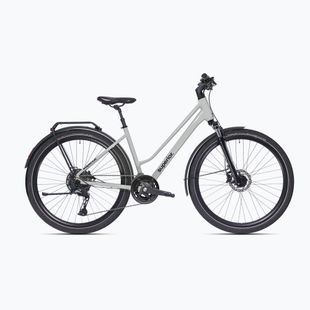
 Extra -5% with the code SPORTWomen's trekking bike Superior BLOX 6.2 T MS gloss grey€649.99€617.49Lowest price: €617.49
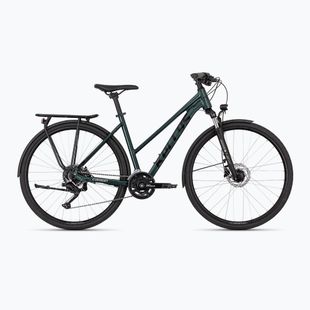 NewTrekking bike Kellys Carson 50 28" emerald green€649.99 -€20.00Lowest price: €669.99Recommended retail price: €809.99
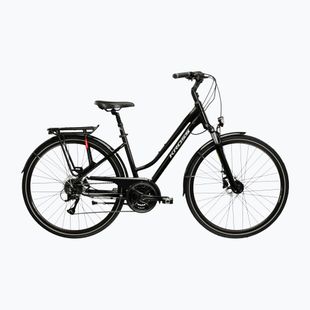 Women's trekking bike KROSS Trans 4.0 W black/silver/shine€649.99 -€20.00Lowest price: €669.99Recommended retail price: €739.99
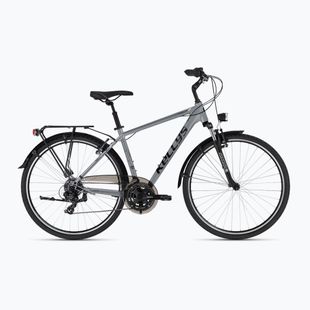 Extra -5% with the code SPORTTrekking bicycle Kellys Carson 10 28" moonstone grey€529.99€503.49Lowest price: €476.99
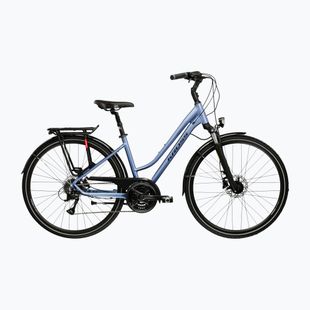 Women's trekking bike KROSS Trans 4.0 W blue/black/matte€649.99 -€20.00Lowest price: €669.99Recommended retail price: €739.99
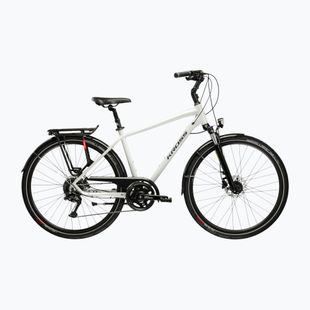 Trekking bike KROSS Trans 5.0 grey/navy/shine€769.99 -10%Lowest price: €859.99Recommended retail price: €859.99
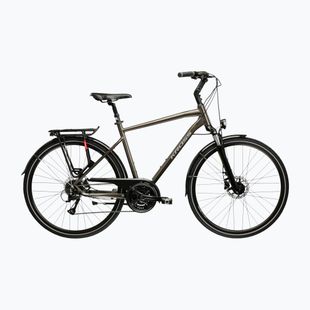 Trekking bike KROSS Trans 4.0 brown/silver/shine€669.99 -€70.00Lowest price: €739.99Recommended retail price: €739.99
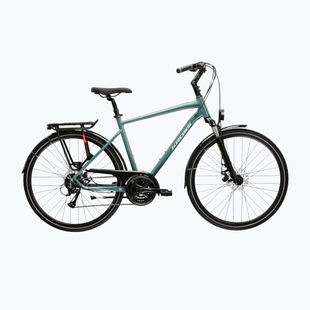 Men's trekking bike KROSS Trans 3.0 green/silver/shine€559.99 -10%Lowest price: €619.99Recommended retail price: €619.99
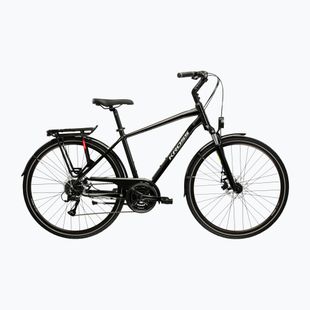 Trekking bike KROSS Trans 3.0 black/grey/shine€579.99 -€37.50Lowest price: €617.49Recommended retail price: €649.99




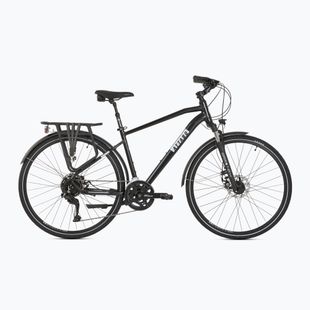
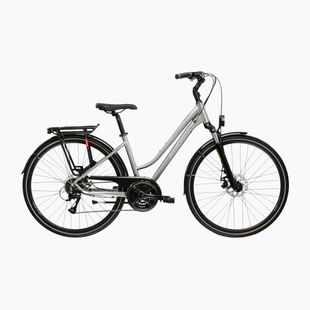


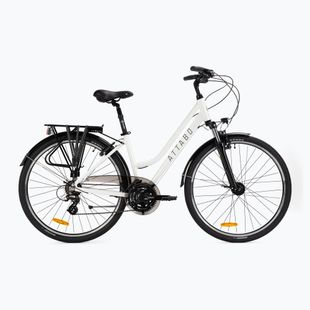


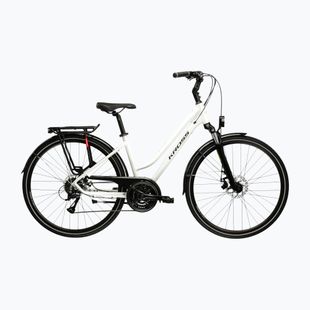
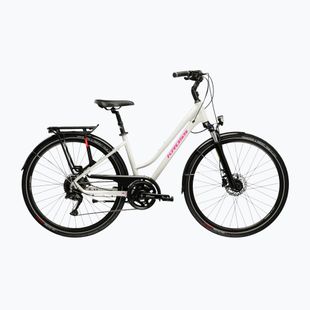


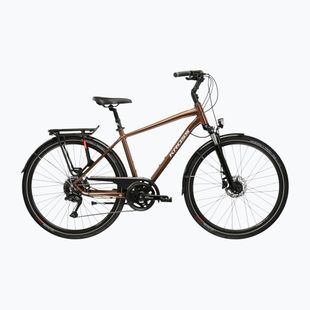
Trekking bikes – a comfortable solution for everyday routes and longer journeys
Trekking bikes are designed for people who want to combine daily city riding with trips on paved roads, hardpacked gravel and easier off‑road routes. A well‑matched trekking bike should provide a comfortable riding position, stable handling, a gear range suited to the terrain, effective braking, comfort over longer distances, the ability to carry luggage, an appropriate frame size, an ergonomic cockpit and equipment adapted to the intended use. This type of touring bike can serve both for commuting and for multi‑hour rides, as its design combines features useful for regularly covering varied routes. A women’s trekking bike and a men’s trekking bike may differ in geometry and frame style, but in both cases the most important factors are fit to height, standover height and preferred riding position. A women’s trekking frame with a lowered top tube can make mounting and dismounting easier, but this frame style may also be comfortable for other riders. Among bicycle brands is Kellys, whose models are worth comparing in terms of geometry, components and the equipment of a specific version. Trekking bikes are often prepared for or factory‑equipped with travel‑use elements such as fenders, a rack or lights, but the exact kit should always be checked in the specification. When assembling your set it’s also worth choosing a bicycle helmet that fits head circumference and riding style. With appropriate geometry and well‑chosen components, trekking bikes can perform well as versatile machines for daily commutes and bicycle touring.
Women’s and men’s trekking bikes – how to choose the frame and position?
Trekking bikes should primarily be matched to the rider’s body, because an incorrect frame size can make it difficult to achieve a comfortable position during long hours of riding. A women’s trekking bike may have a frame with a lower top tube to ease mounting, while a men’s trekking bike often uses a classic design with a higher top tube. However, this division is not the only selection criterion. A women’s trekking bike should suit the leg, torso and arm lengths of the specific person, just as a men’s trekking bike requires a proper reach to the handlebars. When choosing trekking bikes it is worth checking frame size, standover height, top tube length, saddle adjustment range, handlebar position, grip width, brake lever positioning, saddle comfort, the possibility to fine‑tune the riding position and the actual riding feel. A women’s trekking bike should allow comfortable control of the handlebars without excessive torso extension, and a men’s trekking bike should not force too much forward lean if the rider expects a touring posture. Popular models include the Kross trekking bike, and products from Kross can be compared by components, geometry and supplied equipment. As with other brands, a Kross trekking bike should be selected based on the specific specification rather than the series name alone. A touring bike should also allow convenient carriage of items needed on a trip. For longer routes practical options include bike bags and backpacks, which reduce the need to carry all luggage on your back. Trekking bikes used for daily commuting should also be matched to storage and security possibilities at the destination. If the route includes frequent stops, ease of mounting can be more important than on long uninterrupted stretches. A well‑fitted women’s or men’s trekking bike lets you retain a comfortable position and make effective use of trekking bikes both in the city and on weekend tours.
Trekking bikes – drivetrain, brakes, wheels and equipment for the route
Trekking bikes are used on routes with varying gradients and surfaces, so their components should match the real riding conditions. A trekking bike intended for longer tours should offer a gear range that makes it easy to tackle both flat sections and climbs with luggage. When comparing trekking bikes, important factors include the number and range of gears, the type of shifting mechanism, brake performance, wheel diameter, tire width, tread suited to the surface, the presence of a suspension fork, rim durability, the ability to mount a rack and additional equipment useful for daily use. A touring bike used mainly on asphalt may have different tyre requirements than a model regularly covering gravel and forest tracks. Women’s and men’s trekking bikes should also be chosen with the planned load in mind, especially if the rider intends to mount panniers. Among the bicycle manufacturers is Superior, whose models are worth comparing with other options by drivetrain type, brakes and geometry. A Kross trekking bike may have a different configuration than a comparable model from another brand, so before purchase it’s best to analyze specific components instead of relying solely on the manufacturer’s name. A women’s trekking bike used in the city may benefit from additional equipment that increases practicality for commuting, while a men’s trekking bike intended for tours may require a rack, fenders or extra lighting. For frequent riding after dark it’s worth checking bicycle lighting suited to the place of use. Trekking bikes also require regular checks of tire pressure, drivetrain wear, brakes and bolt connections. Proper saddle and handlebar setup can further improve comfort during long hours of riding. With a conscious match of drivetrain, tires and equipment, a trekking bike can serve efficiently both for shorter trips and for multi‑day touring on trekking bikes.
Electric trekking bike – power assist for longer rides
Trekking bikes are also available with electric assistance, which can make it easier to cover longer distances, climbs and routes with heavier luggage. An electric trekking bike retains the utilitarian character of classic trekking but adds a motor and battery that support pedaling within the design limits of the specific model. When choosing such a trekking bike it’s worth analyzing the motor placement, battery capacity, declared range, drive torque, the total bike weight, the method of controlling assistance, charging time and method, gear range, brake performance and luggage‑carrying capability. The real range of an electric trekking bike depends, among other things, on the level of assistance, rider and luggage weight, route profile, temperature and surface, so manufacturer figures should be considered in the context of actual conditions. An electric trekking bike can be a practical choice for people commuting longer distances or planning touring in hillier terrain. The range also includes models from Romet, which should be selected according to the specification and intended use of the specific variant. Those interested in assistance can also compare electric bikes of various types to match the construction to the routes most often ridden. A women’s electric trekking bike should be properly fitted in terms of geometry and frame height, as should a men’s electric trekking bike. A women’s trekking bike does not automatically become more comfortable because of a motor if the frame size or handlebar position are incorrect. The same rule applies to a men’s trekking model. A touring bike with assistance can make it easier to maintain a planned pace during a longer trip, but it still requires regular checks of the drivetrain, brakes, tires and electrical system according to the manufacturer’s recommendations. Before a trip it’s worth planning battery charging options and considering the additional weight of the bike during transport. Classic and electric trekking bikes are primarily united by a touring character and an emphasis on comfort, functionality and the ability to adapt equipment for multi‑kilometre routes.