


Filters
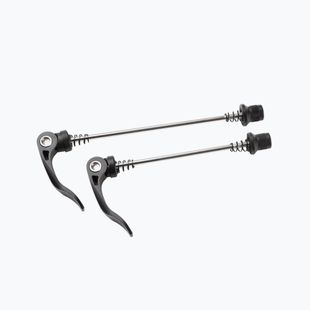


Clamps
and bicycle clamps in the offer of SportanoEvery cyclist, regardless of level, should be aware of the key role played by clamps and clamps in the construction of a bicycle. Although they may seem inconspicuous, they are responsible for holding many key components in place, ensuring stability, safety and comfort.Types of clamps: from simple clamps to advanced
quick release clampsMany components in the cycling world have evolved as technology has advanced and the needs of users have grown. One such component is the clamp. In their simplest form, clamps resemble standard clamps whose main purpose is to hold certain bicycle components in place, such as the seatpost or handlebar bridge. Traditional clamps are usually made of strong materials, such as steel, and need tools to tighten or adjust.
However, in response to the needs of more demanding cyclists, advanced quick release clamps have been developed. These state-of-the-art solutions allow users to make quick and easy adjustments, such as saddle height, without the need for tools. The quick release mechanism consists of a lever that allows for instant fastening and unfastening, which is extremely useful when you need to quickly adjust your bike to the current riding conditions.Saddle post clamps: maintaining saddle height and
saddle stabilityThe seatpost is one of those components of the bicycle that needs to be firmly fixed, but at the same time giving the possibility of adjustment. Seatpost clamps play a key role here. A good quality seatpost clamp not only ensures that the saddle stays in the position you choose, but also allows you to instantly change its position according to your needs.
For example, when riding in mountainous terrain, a cyclist may want to lower the saddle to increase stability on descents and then raise it on a flat section of the trail. It is therefore important that the seatpost clamp works efficiently and allows for easy height adjustment. It is also worth considering the material of the clamp - although many are made of durable steel, there are also models available in lightweight aluminium alloys or even carbon, which reduce the weight of the bike without sacrificing strength or functionality.Stem clamps: the link between the handlebars and the frame of the
of the bicycleThe bicycle bridge plays a key role in the steering system, connecting the handlebars to the front wheel forks via the steerer tube. The sternum clamp is the component that directly encompasses the handlebars, providing stability and enabling precise control of the bicycle. The correct function and quality of the sternum clamp is extremely important for the safety and comfort of the rider.
Traditional bridge clamps are usually made from a single piece of material and have one or two screws to tighten and adjust. The use of more screws provides a more even distribution of pressure on the handlebars, resulting in greater stability and safety.
Modern bicycles, especially the higher-end ones, use clamps with special shapes and technologies. They may have anti-slip systems or surfaces with special textures that provide an even better grip on the handlebars.
The materials used for bridge clamps have also evolved. Although steel models are still popular because of their strength, more and more manufacturers are using lightweight aluminium alloys or even carbon composites. The latter, although more expensive, provide excellent stiffness with minimal weight, which is valued in professional cycling.
It is worth remembering that the selection of a suitable bridge clamp should not be underestimated. A handlebar clamp that is too loose can rotate independently of wheel movement, which is dangerous, especially during dynamic riding. Otherwise, over-tightened bolts can damage the handlebars, especially if they are made of softer materials such as carbon. Therefore, it is always advisable to follow the manufacturer's recommendations and regularly check the condition of the bridge clamp.
Collapse the description