


 Extra -5% with the code BLACKDEALSHMS training bench L1110 black€59.99€56.99Lowest price: €59.99


Exercise benches – how to choose a construction for strength training?
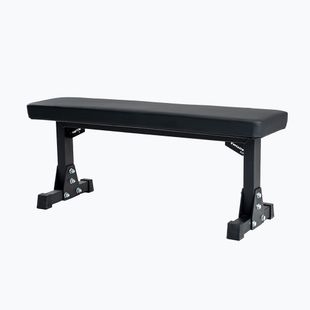
Exercise benches are the foundation for many exercises with dumbbells, barbells and bodyweight, so their construction should match the planned load and available space. A well-chosen exercise bench should provide a stable base, adequate load capacity, stiff frame, comfortable backrest, durable upholstery, safe adjustment system, non-slip feet, proper seat height, appropriate backrest width and allow for maintaining the correct position during exercises. A training bench can have a flat, adjustable or multifunctional construction, and a training bench should be chosen according to the type of movements performed. Models from the XTREXO brand can be paired with appropriately selected dumbbells, creating a set for presses, rows or arm exercises. A bench for pressing should guarantee stable support when working with weights, while a barbell bench also requires checking compatibility with racks. A professional exercise bench may offer higher load capacity and a wider range of adjustments, but not every user needs an elaborate construction. A small exercise bench will be practical in a home training area if its parameters match the planned workouts. Exercise benches should be selected primarily based on load capacity, stability and ergonomics, because these features determine the functionality of exercise benches.
Folding and incline exercise benches – solutions for a home gym
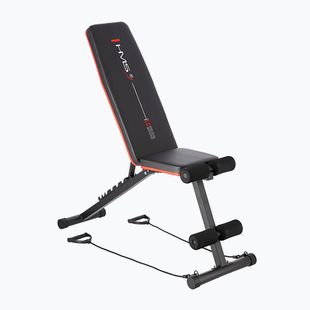
Exercise benches used in an apartment or a small home gym should provide a reasonable compromise between functionality and storage options. A folding exercise bench can be placed against a wall or stowed in a designated spot after training if the manufacturer has provided a safe folding mechanism. Similarly, a folding exercise bench should have a stable lock, reliable hinges, rigid construction when unfolded, durable adjustment elements, compact dimensions, easy operation, non-slip end caps, easy carrying, adequate load capacity and no play at moving joints. A folding bench is particularly practical when the same space is used for other activities. A folding training bench can also offer backrest adjustment, allowing one construction to support more exercise variations. An incline bench enables setting the torso at an angle, which changes the nature of the work during selected strength exercises. An incline exercise bench should have a stable mechanism for fixing the backrest position, and the adjustment must not change unintentionally under load. Among strength training equipment there are models from the HMS brand, so an HMS bench can be compared with other constructions in terms of adjustment range and user parameters. An HMS bench should be evaluated by specific model, as different variants may serve different types of training.
Adjustable exercise benches work well with barbells and free weights, but the angle setting should always correspond to the technique of a given exercise. A bench for pressing can be standalone or work with a separate rack, so before purchase you should check dimensions and the spacing of elements. A barbell bench requires a stable foot position and an appropriate backrest length, while a bench for working with weight should take into account the combined mass of the user and the weights used. A bench for working with weight should also be selected with a safety margin relative to training parameters, but without exceeding the values specified by the manufacturer. A professional exercise bench can offer greater frame stiffness, wider base, precise adjustment, thicker upholstery, durable steel profiles, strong welds, stable support points, easier position changes, transport wheels or other solutions depending on the model. A small exercise bench may better suit a person training with dumbbells in limited space. Exercise benches should not slide on the floor during dynamic racking of weight, so it is also worth ensuring an appropriate surface. A folding exercise bench should provide the same certainty of set-up as non-folding constructions when used as intended. Indeed, stability and safe adjustment determine the practical value of exercise benches.
Multifunctional benches, preacher curl attachments and benches for abdominal training
Multifunctional exercise benches are intended for users who want to perform several groups of exercises at a single station. A multifunctional exercise bench may offer adjustable backrest, seat, additional grips or the ability to work with other elements, but the equipment range always depends on the specific model. A multifunctional exercise bench should provide stability in every position, clear adjustment system, safe locks, adequate load capacity, ergonomic support, durable upholstery, appropriate spacing of elements, freedom of movement, easy configuration changes and a construction matched to the user’s height. A bench with a preacher curl pad and a preacher curl bench allow stable arm support during specific elbow-flexing muscle exercises. A preacher curl bench should have the support positioned at a height that allows a comfortable position without lifting the shoulders. Among strength training products there is equipment from Nike Strength, which is worth comparing by construction, load capacity and intended use. A bench for working with weight can be combined with weights suitable for the bars or other elements of the set. A bench for working with weight should maintain full stability even under heavier loads, and the user should not exceed the maximum parameters specified by the manufacturer.
Exercise benches also include models mainly intended for abdominal muscle training. Sit-up benches may have an adjustable incline and leg-stabilizing elements, allowing changes in position during exercises. An abdominal exercise bench should have comfortable back support, stable leg rollers, appropriate backrest length, reliable angle adjustment, sturdy frame, non-slip feet, durable upholstery, no sharp edges, comfort during movement and a construction suitable for the user’s bodyweight. A sit-up bench can be simpler than a multifunctional exercise bench because its use is more specialized. An incline sit-up bench allows exercising at an angle, but a greater incline should not automatically be equated with a better training effect. An incline bench can also be used for other movements if the manufacturer designed it for such use. An incline exercise bench should have stable supporting elements and a reliable lock, especially with frequent setting changes. Those focusing on this muscle group can pair the bench with abdominal training devices, choosing solutions that fit their training plan. A bench with a preacher curl pad and a preacher curl bench have different uses than an abdominal exercise bench, so extra modules should arise from real needs. A training bench does not need to have every possible function if the user performs a limited set of movements on it. Well-chosen exercise benches allow building a station tailored to a specific plan, and functionality should result from construction quality rather than the mere number of add-ons.
Benches for working with weight – safety, load capacity and stability during pressing
Exercise benches intended for heavier loads require special attention when assessing the frame, support points and declared load capacity. A bench for pressing should be placed on a level surface and provide sufficient backrest width so the user can stably position the shoulder blades and feet. A barbell bench used with racks must be compatible with their height and spacing, so when assembling a set it is worth checking strength equipment racks as well. A professional exercise bench may have a greater own weight, which often favors stability, but the most important factors remain the parameters of the specific model. A bench for working with weight should be evaluated for maximum allowable load, profile stiffness, quality of joints, base width, backrest stability, upholstery thickness, traction to the floor, adjustment range, durability of locking elements and ergonomics of position. A bench for working with weight should take into account both the user’s weight and the equipment used. Among manufacturers of accessories and training equipment is Sveltus, whose solutions are worth choosing according to the planned training character. Training benches can also be paired with bars matching the available weights. A training bench should remain stable even when the user changes position between sets, so play and damaged locks require attention before continuing exercise.
Exercise benches should be regularly inspected, especially when the equipment is intensively used by several people. Training benches require checking bolts and connections, adjustment systems, weld condition, upholstery, rubber feet, transport wheels, if present, locking elements, backrest support, seat stability and the overall geometry of the construction. A training bench with visible damage should not be used with heavy weights until the issue is resolved according to the manufacturer’s recommendations. A folding training bench requires additional inspection of the folding mechanism, and a folding exercise bench must be correctly locked before starting a set. A folding bench must not be used in a partially unfolded position unless the manufacturer intended such a setting. Folding benches, small exercise benches and more elaborate multifunctional benches should be chosen to leave space around the equipment for safely racking weights. A bench used for pressing should work with an appropriate safety system, especially when training with heavier loads. Sit-up benches and incline sit-up benches require inspection of leg supports and angle adjustments. A bench with a preacher curl pad and a preacher curl bench should have stable mounting for the additional module. A multifunctional exercise bench can combine many uses, but each configuration must be used according to the instructions. Proper assembly, load checks and regular inspections ensure that exercise benches remain a functional element of a home or professional training area, and user safety should be the most important criterion when choosing exercise benches.