


 Extra -10% with the code WARMUP
 Extra -5% with the code WARMUPShoe crampons Viking Soltoro yellow€27.99€26.59Lowest price: €22.39
 Extra -10% with the code WARMUP
 Extra -10% with the code WARMUP
 Extra -5% with the code WARMUP
 Extra -10% with the code WARMUPShoe crampons Volven Pro Traxion Black black€29.99€26.99Lowest price: €25.49
 Extra -5% with the code WARMUP
 Extra -5% with the code WARMUP
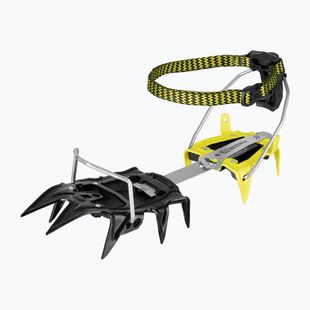 Extra -10% with the code WARMUPSalewa Alpinist Pro black/yellow automatic crampons€209.99€188.99Lowest price: €167.99
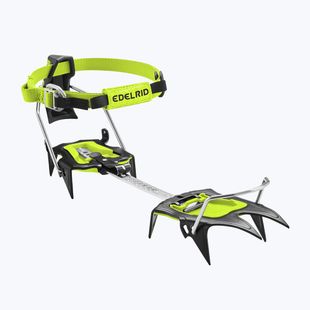 Extra -5% with the code WARMUPEDELRID Nemo Auto night/oasis crampons€129.99€123.49Lowest price: €116.99
 Extra -15% with the code WARMUPEDELRID Spiderpick II icemint shoe rack€59.99€50.99Lowest price: €53.99
 Extra -5% with the code WARMUPEDELRID Spiderpick II oasis shoe rack€55.99€53.19Lowest price: €50.39
 Extra -5% with the code WARMUPEDELRID Spiderpick II night shoe rack€55.99€53.19Lowest price: €50.39
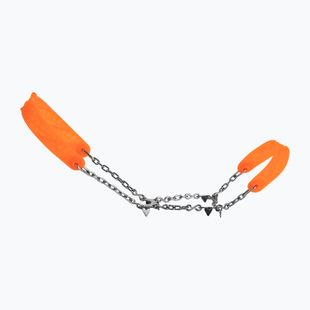 Extra -10% with the code WARMUPSalewa Ultralight Mtn Spike Crampon orange€39.99€35.99Lowest price: €37.99
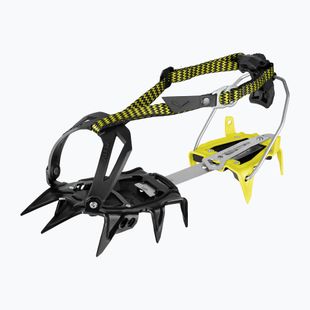 Extra -20% with the code WARMUPSalewa Alpinist Combi semi-automatic crampons black/yellow 00-0000000898€219.99€175.99Lowest price: €143.99
 Extra -20% with the code WARMUPSalewa Alpinist Walk basket crampons blue 00-0000000814€179.99€143.99Lowest price: €119.99
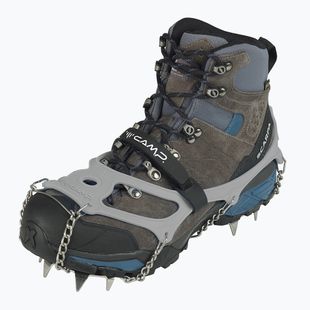 New Extra -10% with the code WARMUP
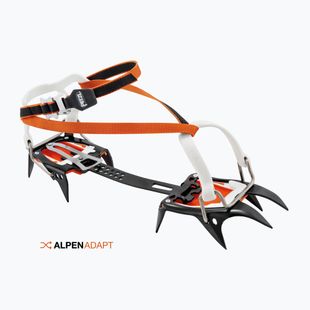 New Extra -5% with the code WARMUPBasket crampons Petzl Irvis Flexlock€159.99€151.99Lowest price: €143.99
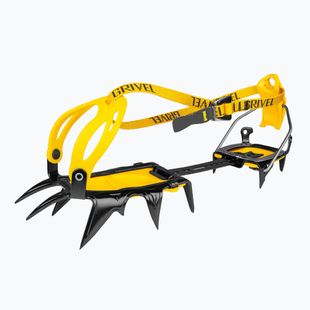 New Extra -15% with the code WARMUPSemi-automatic crampons Grivel G12 LT yellow€179.99€152.99Lowest price: €143.99
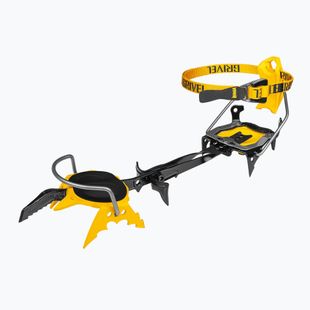 New Extra -15% with the code WARMUPAutomatic crampons Grivel G20+ LT yellow€239.99€203.99Lowest price: €191.99
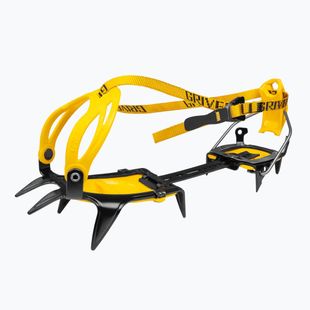 New Extra -5% with the code WARMUPSemi-automatic crampons Grivel G10 LT yellow€119.99€113.99Lowest price: €107.99
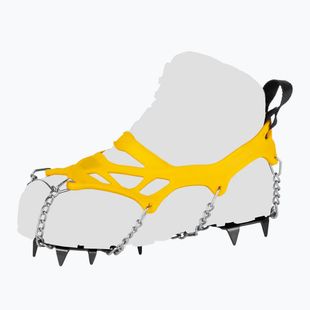 New Extra -10% with the code WARMUPShoe crampoons Grivel Explorer yellow€39.99€35.99Lowest price: €39.99
 New Extra -10% with the code WARMUPShoe crampoons Grivel Explorer Light yellow€44.99€40.49Lowest price: €44.99
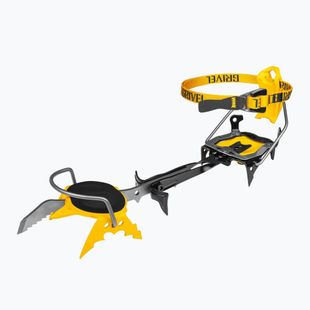 New Extra -10% with the code WARMUPAutomatic crampons Grivel G20+ LT Katana Point yellow€249.99€224.99Lowest price: €212.49
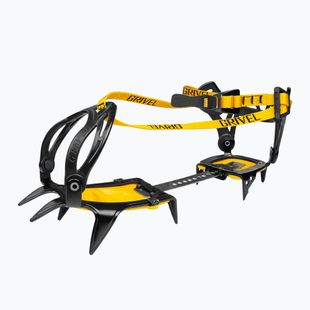 New Extra -5% with the code WARMUPBasket crampons Grivel G10 LT black/yellow€119.99€113.99Lowest price: €118.99
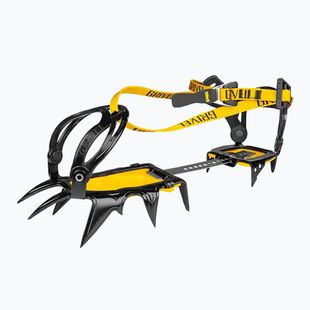 New Extra -5% with the code WARMUPBasket crampons Grivel G12 LT black/yellow€159.99€151.99Lowest price: €152.99


Crampons and traction cleats – how to choose grip for winter conditions?
Crampons and traction cleats increase footwear grip on snow and ice, but they differ in construction, intended use and level of support in demanding terrain. Traction cleats, including mini cleats, are designed primarily for walking on icy sidewalks, forest tracks and less steep trails, while crampons are used in more demanding winter conditions when properly matched to the footwear and the nature of the route. Traction cleats for boots usually have an elastic attachment system and traction components, allowing relatively quick fitting. Boot crampons have a more complex construction and require checking compatibility with a specific boot model. When choosing traction cleats and crampons, it is worth assessing the type of terrain, slope gradient, snow conditions, type of ice, attachment system, size range, material of traction elements, weight, ease of fitting and stability once fitted. Among mountain equipment there are products from the Grivel brand, which should be chosen according to the specific activity. Trekking and touring crampons should work with appropriate footwear, and more technical models also require proper skills. Touring traction cleats do not replace crampons on steep, hard slopes. Traction cleats and crampons should therefore be chosen not only by boot size but above all by the expected terrain and intended use, since that determines their functionality.
Crampons and traction cleats for boots – differences between touring cleats and trekking crampons
Crampons and traction cleats may look similar in their general purpose, but their applications are clearly different. Traction cleats for boots, touring cleats and mini cleats are mainly useful when you need to improve grip on icy, compacted surfaces without entering technical high-mountain terrain. Mini cleats for boots usually have a compact design, so they are easy to carry in a backpack and put on when a slippery section appears. Anti-slip cleats for boots can have metal studs, chains or other solutions depending on the model. The term rubber cleats for boots most often refers to a construction with an elastic element wrapping the shoe, while the actual elements contacting the ground may be made of different materials. Traction cleats and crampons should therefore be evaluated in terms of their actual construction, length of traction elements, placement of contact points under the foot, flexibility of the attachment, resistance to slipping off, fit to the sole, durability of chains, ease of transport, conditions of use and the manufacturer's information. Among equipment for winter outings there are models from the Viking brand, which should be selected according to the indicated range of use.
Crampons for boots are intended for more demanding contact with snow and ice. Trekking crampons can be used during winter outings, but you should always check the attachment system and compatibility with the boot construction. Touring crampons are not a single identical group – models may differ in the number and arrangement of points, stiffness of the connector and the method of attachment. Boot crampons for the mountains should provide secure seating, no play, appropriate length, correct front alignment, reliable heel attachment, compatibility with the footwear, durable construction, control on hard snow, an adequate adjustment system and the ability to fit them efficiently while wearing gloves. In more demanding winter conditions the equipment can be complemented by ice axes, but both their use and the use of crampons require appropriate knowledge and skills. The terms anti-slip crampons for boots and rubber crampons for boots are sometimes colloquially used for simple traction overlays, but such products should not be equated with technical mountaineering crampons. Traction cleats and crampons should be chosen according to their real purpose, and boot cleats are not substitutes for crampons where slope and ground hardness require more advanced equipment. Proper differentiation allows traction cleats and crampons to be matched to a specific winter route rather than relying solely on the product name.
Crampons and traction cleats for trekking boots – fit, sizing and models for children
Crampons and traction cleats must be properly fitted to the footwear, because even high-quality equipment will not work correctly if it shifts while walking. Traction cleats for boots with elastic attachments should cover the upper and the sole according to the manufacturer's instructions, and the elements responsible for grip must be located in the correct places under the foot. Women's traction cleats for boots do not need to have a separate construction from unisex models – the most important thing is the size range and fit to the specific boot. Likewise, traction cleats for children should be chosen only from products that the manufacturer specifies for children's shoe sizes. For younger users, adult supervision, correct fitting, checking attachment tension, fit to the sole, no slipping, appropriate size, easy removal, selection for gentle terrain, inspection of technical condition and use in accordance with the instructions are necessary. Traction cleats for children are not intended to replace technical mountaineering equipment on steep, icy slopes. Among products intended for outdoor activities there are models from the Salewa brand, so Salewa cleats should be chosen according to size range and specific purpose. Salewa traction cleats, like other touring cleats, should be tried on with the boots in which they will actually be used before going out.
Traction cleats and crampons require particularly precise fitting when stiffer constructions are involved. Crampons for boots can use different attachment systems, so not every model fits every shoe. Trekking crampons with a basket-style binding may be compatible with a broader group of suitably stiff boots, while semi-automatic and automatic systems require specific structural elements in the footwear. Before purchase, check the manufacturer's information for both the crampons and the boots. For winter hikes an appropriate pair of high trekking boots is especially important, whose stiffness, sole and construction match the planned route. Mountain crampons should be set so that the frame does not protrude incorrectly beyond the footwear and does not change position during the march. Evaluate touring crampons in terms of binding system, length adjustment, boot stiffness, sole profile, placement of points, heel stability, front attachment, ease of adjustment, set weight and intended terrain. Mini cleats and mini traction cleats are simpler in this respect, but they also require proper sizing. Anti-slip cleats for boots, rubber cleats for boots and women's traction cleats should be checked after a few steps to ensure they stay in the right place. Traction cleats and crampons should also be tested before a longer trip rather than being put on for the first time in difficult terrain. This way traction cleats and crampons can be used according to their purpose, without the risk resulting from obviously improper fitting.
Crampons and traction cleats for the mountains – use, inspection and transport of winter equipment
Crampons and traction cleats work directly on hard, wet and often dirty ground, so they require regular inspection after each winter outing. Boot crampons should be cleaned of mud, snow and moisture and dried according to the manufacturer's recommendations. Crampons for boots should be checked for condition of points, corrosion, cracks, loose parts, functionality of straps, condition of buckles, connector adjustment, snow-shedding elements, if present, stability of attachment and compatibility with the currently used footwear. Trekking and touring crampons should not be used if a defect may affect secure fastening. Mountain crampons also require the skill to walk in a way that reduces the risk of hooking the points on a gaiter or another piece of equipment. Among mountain activity equipment there are products from the EDELRID brand, whose intended use should always be checked in the specification of a specific product. People putting together a kit for a winter outing may also consider trekking poles, if the nature of the route and conditions allow their safe use. Traction cleats and crampons should be transported so that metal parts do not damage clothing, backpack or other equipment.
Traction cleats and crampons also require proper handling during the outing itself. Traction cleats for boots should be put on before a slippery surface begins to significantly hinder safe movement, preferably in a stable place. After fitting traction cleats for boots, it is worth rechecking them after a short walk. Mini cleats and touring cleats can be a convenient addition for variable winter conditions, but on a steep slope covered with hard snow they may be insufficient. Anti-slip cleats for boots, if the term is used for simple traction overlays, should not be treated as technical crampons. The terms rubber crampons for boots and rubber traction cleats for boots should always be compared with the product's actual construction. Women's traction cleats and children's traction cleats should be evaluated by size and attachment method, not just by the user group label. Salewa cleats or models from other manufacturers may differ in construction, so the instructions of the specific product remain the primary source of information about use. During a winter hike gaiters can also be useful to help limit snow entering the footwear. It is worth checking cleat positioning, attachment tension, condition of chains, crampon position, strap fastening, snow accumulation under the foot, condition of the boot sole, changes in conditions, slope gradient and your own skills. Traction cleats and crampons do not eliminate the risk of slipping nor do they replace experience in winter terrain. Proper assessment of conditions, equipment selection and regular inspection make traction cleats and crampons effective aids for moving on snowy and icy routes.