


Filters
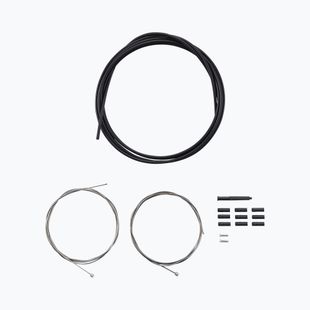
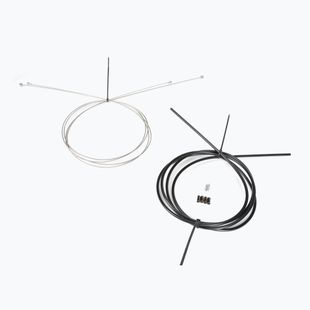
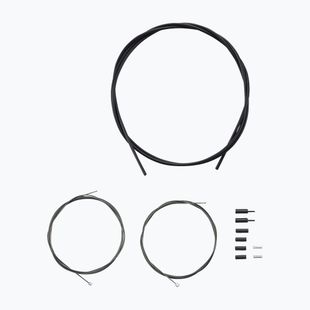 Gear cable and housing set Shimano Y60198010 Optislick black€14.99Recommended retail price: €23.99
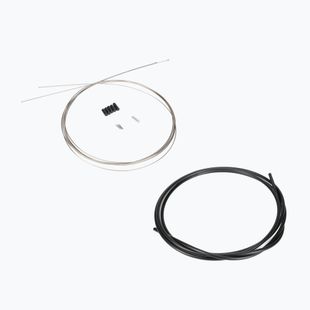 Shimano derailleur cable and armour set road black Y60098022€15.99Recommended retail price: €21.99
 Shimano SLR brake cable sheath 1 m black€1.39 -26%Lowest price: €1.89Recommended retail price: €2.89
 Shimano derailleur cable P-SM-SCINNER 1 pcs. steel€1.29 -24%Lowest price: €1.69Recommended retail price: €1.69
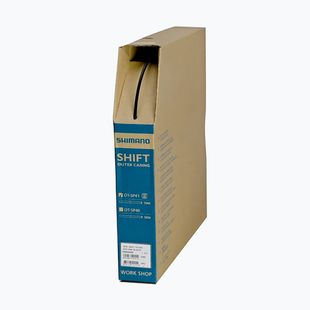 Shimano gear cable outer casing SIS-SP41 1 m black€1.49 -12%Lowest price: €1.69Recommended retail price: €1.69
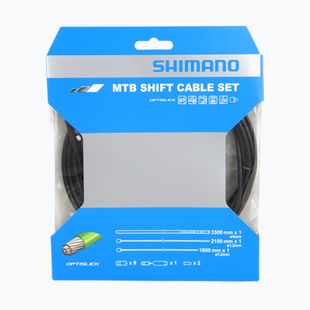 Shimano derailleur cable and armour set Y60198090 MTB Optislick€19.99Recommended retail price: €22.99
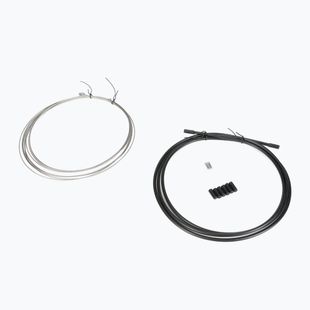


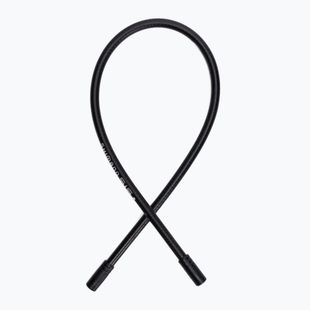

Armour
and bicycle cables in the Sportano shopEvery cyclist knows that the correct operation of brakes and derailleurs is the key to a safe and comfortable ride. Armourings and cables are small but extremely important components that play a key role in the functioning of these systems. Although they are often overlooked in discussions about bike maintenance, their condition has a direct impact on the quality of the ride.Function and importance of armouring in the cable systemWhen we talk about bicycles, we often focus on the more visible components, such as frames, wheels or saddles. However, components that are unnoticeable to many, such as armouring, play a key role in the overall cable system, determining how efficiently and effectively our brakes or derailleurs work.
The armour is essentially a cover for the cable. Its main function is to protect the cable from external damage such as mud, dust or water. The armouring also prevents excessive bending of the cable, which could lead to abrasion or breakage. Therefore, armouring is essential in a cable system to ensure a long lifespan for the cables and to ensure the smooth operation of the mechanisms they support.
In addition, the armouring performs an important function in terms of friction. The internal structure of the armour, often in the form of thin spiral wires or laminated layers, is designed to minimise friction between the armour and the cable. Optimising this interaction is crucial to the precise operation of derailleurs and the effectiveness of brakes.
There is also an ergonomic aspect. Modern armours are designed to be easy to fit and adapt to different bike configurations. This makes fitting and servicing easier, which is important for professional bike mechanics and amateurs alike.
Another important aspect is compatibility. Armour needs to be adapted to specific types of cables and brake or derailleur systems. Not every armour will be suitable for every type of cable, so it is important to pay attention to the manufacturer's specifications when choosing the right components.
Armours in a bicycle cable system are not just a simple sheath for the cable. They are complex components designed to optimise the performance of the entire system, protect against external damage and ensure the long term smooth operation of the bike's mechanisms. Without properly designed armour, the entire cable system could not function as effectively as it does.Construction and types of bicycle cables: brake vs.
derailleurWhen we think of bicycles, our attention is usually focused on the more visible parts, such as frames, wheels or saddles. However, for the derailleur and brake system to work properly, properly functioning cables are essential. Bicycle cables are like veins in the human body, transferring power from the brake handle or derailleur handle to the respective mechanisms.
Brake cables are those which transmit the force from the brake handle to the brake caliper. They need to be particularly strong and robust, as they are subjected to high force during braking. For this reason, they are usually thicker than derailleur cables. Their construction is designed to minimise stretching, allowing for more precise and effective braking.
Derailleur cables, on the other hand, are designed to move the derailleur, allowing gear changes. They tend to be thinner and more flexible than brake cables. As a result, they can be easily guided through more complex routes in the bike frame. Their main purpose is to precisely transmit movement from the handlebars to the derailleur.Materials used in the manufacture of armour and cablesWhen it comes to choosing the right materials for armour and cables, manufacturers need to find a balance between durability and flexibility. Stainless steel is the most commonly used material in the production of cables due to its corrosion resistance and strength. In higher-end cables, a Teflon coating provides extra protection from the weather while reducing friction and ensuring smooth operation.
As for the armouring, its main function is to protect the cables from the elements and provide a smooth channel in which they can slide. The inner layer of the armour usually consists of a steel wire spiral, which provides the necessary strength and shape. The outer layer is usually made of plastic or rubber to protect against water, mud and other elements. In more advanced armour, additional layers or coatings can also be found to increase durability, resistance to external agents and to reduce friction between the cable and the armour.
Collapse the description